Building a Unified Design System for
RLDatix’s Healthcare Suite
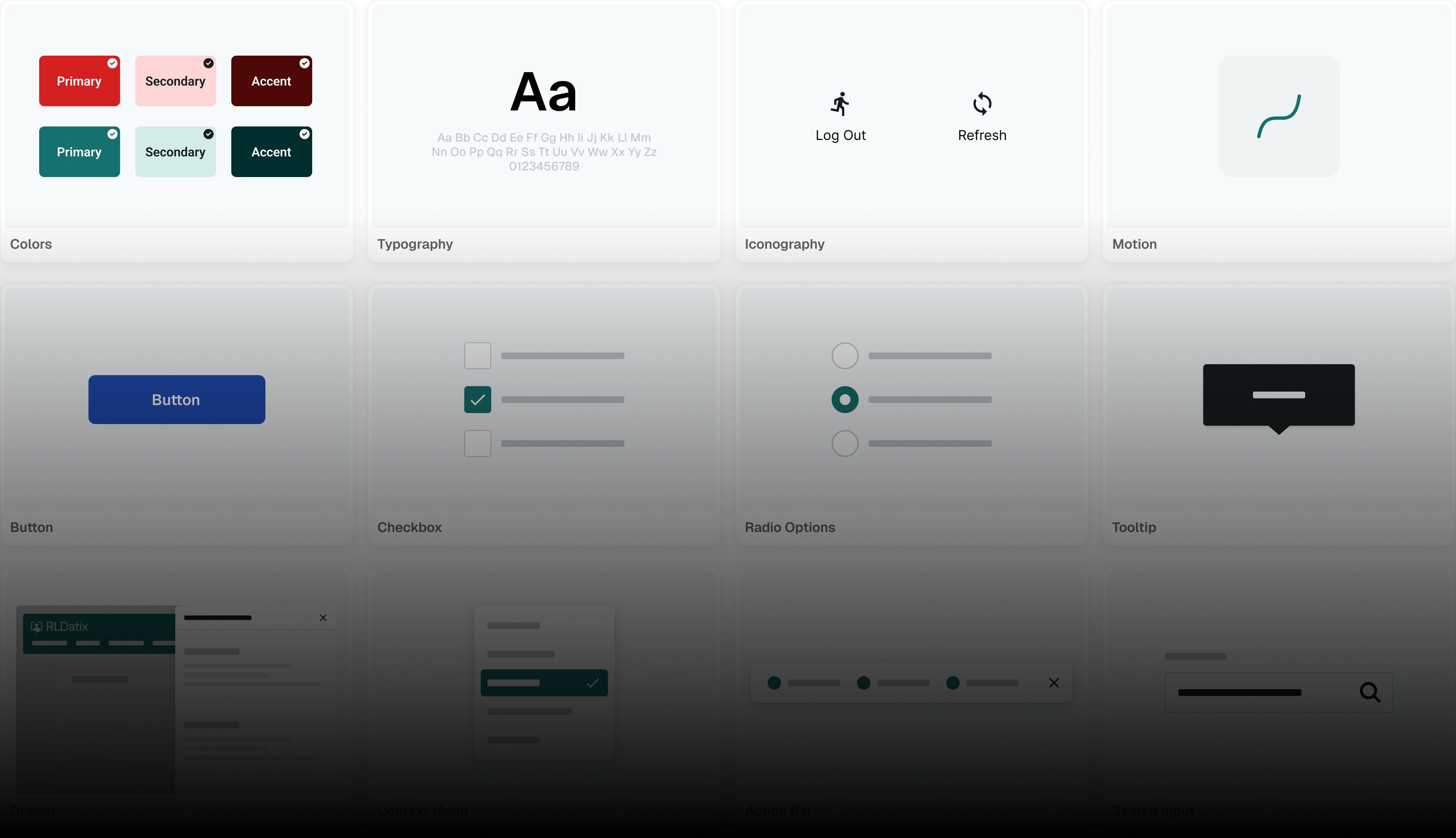
Designing cohesion across an array of disconnected healthcare products.
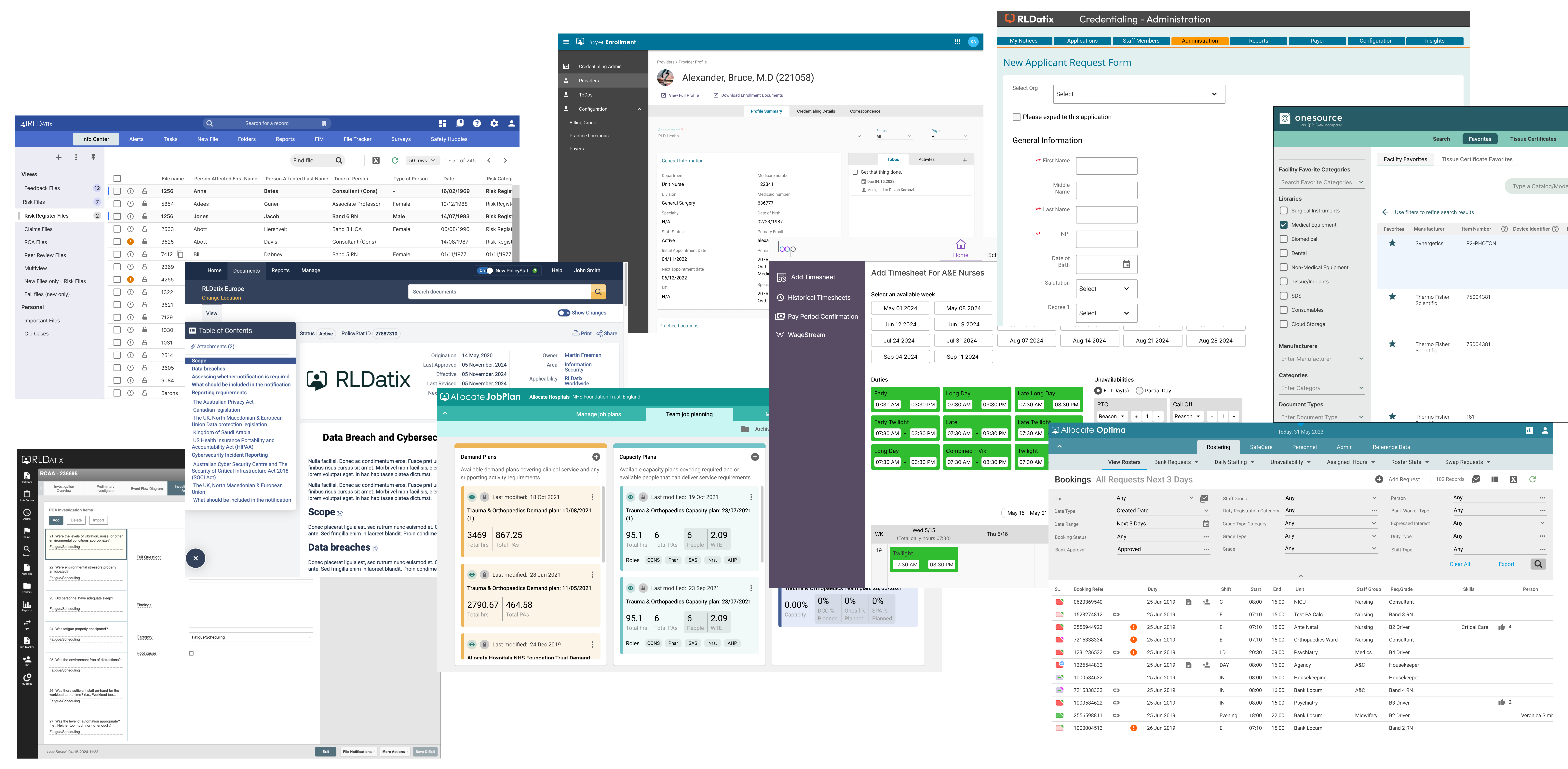
RLDatix is a global leader in healthcare governance, risk, compliance, and operations software. Over the years, the company had acquired many smaller organizations, having a total of 30 products, each bringing its own tech stack, design language, and user experience. The result was a fragmented ecosystem that created unnecessary complexity, slowed down delivery, and made it increasingly difficult to maintain consistency.
So many products, it was chaos
The goal was to unify its wealth of product suites under a single, scalable design foundation called CHO project (Connected Healthcare Operations). The first milestone was to launch the system and refactor the company’s most widely used product, R&S (Risk and Safety), so it could serve as a blueprint for the rest of the portfolio.
Product
Design System
My Responsibilities
Component Architecture, Governance, Documentation, Knowledge Workshops, Design Office Hours.
Tools
Figma, Storybook, Token Studio, WCAG2.2, Azure DevOps
Timeline
5 months
Collaborators
Gonçalo Andrade , Andre Silva, Matheus Vaillaint
Bringing Order to a Complex Ecosystem
Unlike other past projects, where I would take on the research phase and audit, this had been already completed before I joined, and a defined clear roadmap was already laid out. That meant I could jump straight into execution and focus entirely on the craft of building, architecting, and refining the system.
Strategy & Action Plan
- Auditing and identifying the most used UI components.
- Building components by user journey to reduce CSS conflicts, avoid duplication
- Enforcing WCAG 2.2 compliance for accessibility across all products.
- A token structure to support light, dark and themes for a suite of products with different brands.
- Clearer process and more formal process for new requests, bugs etc.
- Phasing the launch so that the team could start small, gain traction, then scale the system across products.

Strong Foundations
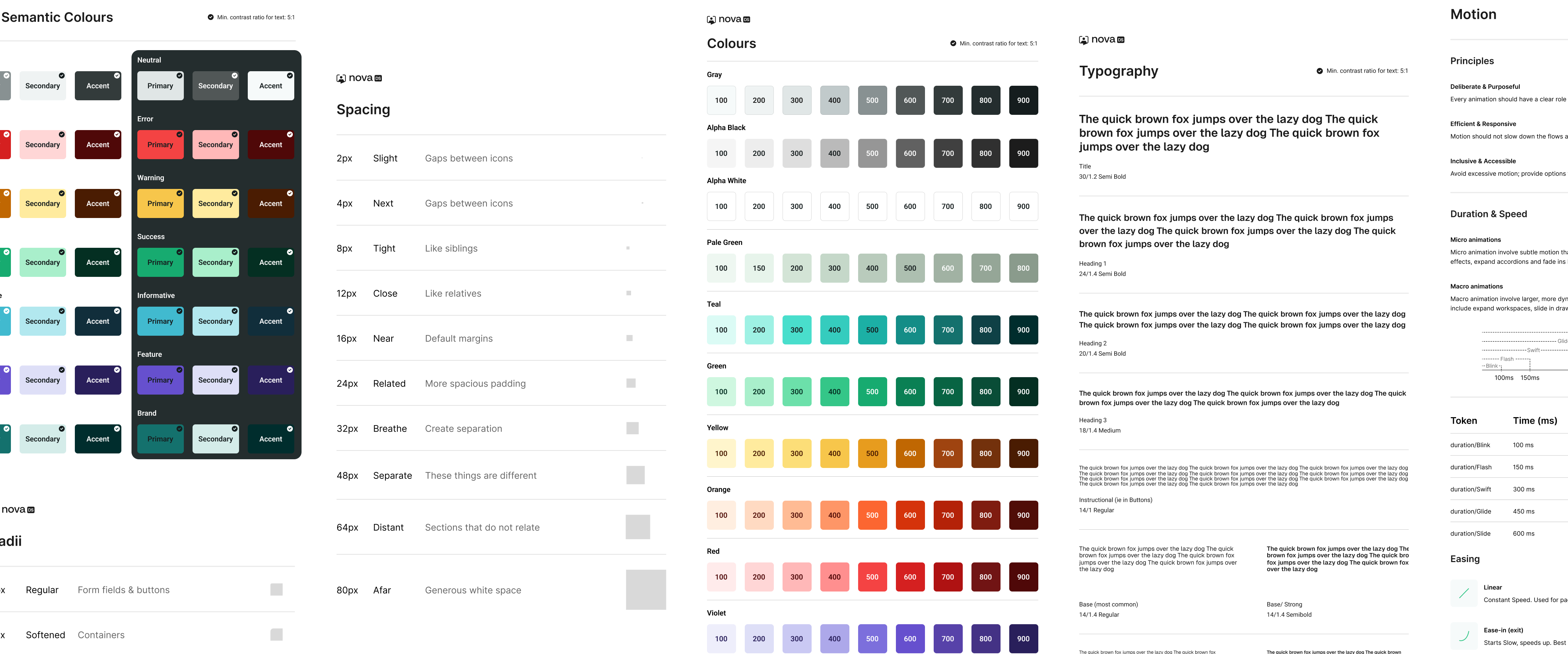
Started out building a flexible and extensive foundational system. This included key design primitives such as color, typography, spacing, and radii. The task here was to support for multiple brand themes across the products and future proof for further product expansion.
From earlier research, an important insight to this task was that hospital staff often work across several RLDatix tools simultaneously, sometimes up to five different products at once. So having distinctive color themes for each product helped users quickly reorient themselves as they switched between tools, improving both efficiency and focus. We also introduced dark themes to support those working night shifts or in low-light environments, where screen comfort becomes critical.
Tokenizing Styles
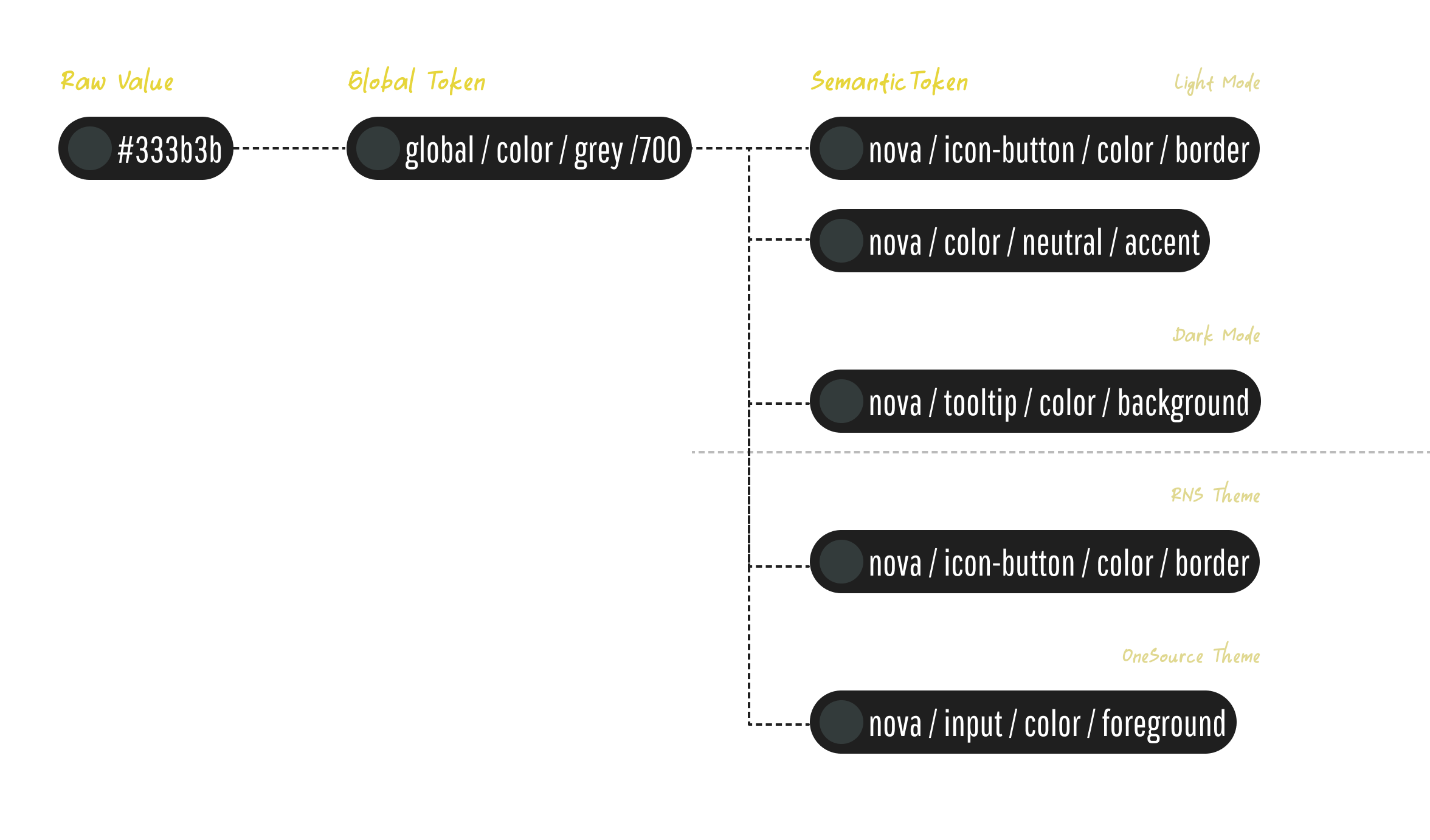
Once the visual language was aligned with stakeholders, the next step was to establish a robust token structure and sync it with the Storybook code library through Token Studio. This would then go on to create a seamless connection between design and development, ensuring both teams worked from a single, consistent source of truth.
Tokens were divided into two layers; global tokens defined the raw values such as colors, spacing, radii and typography. These were then translated into semantic tokens, which gave those values specific meaning based on context. This abstraction made the system more intuitive, easier to maintain, and resilient to the many themes.
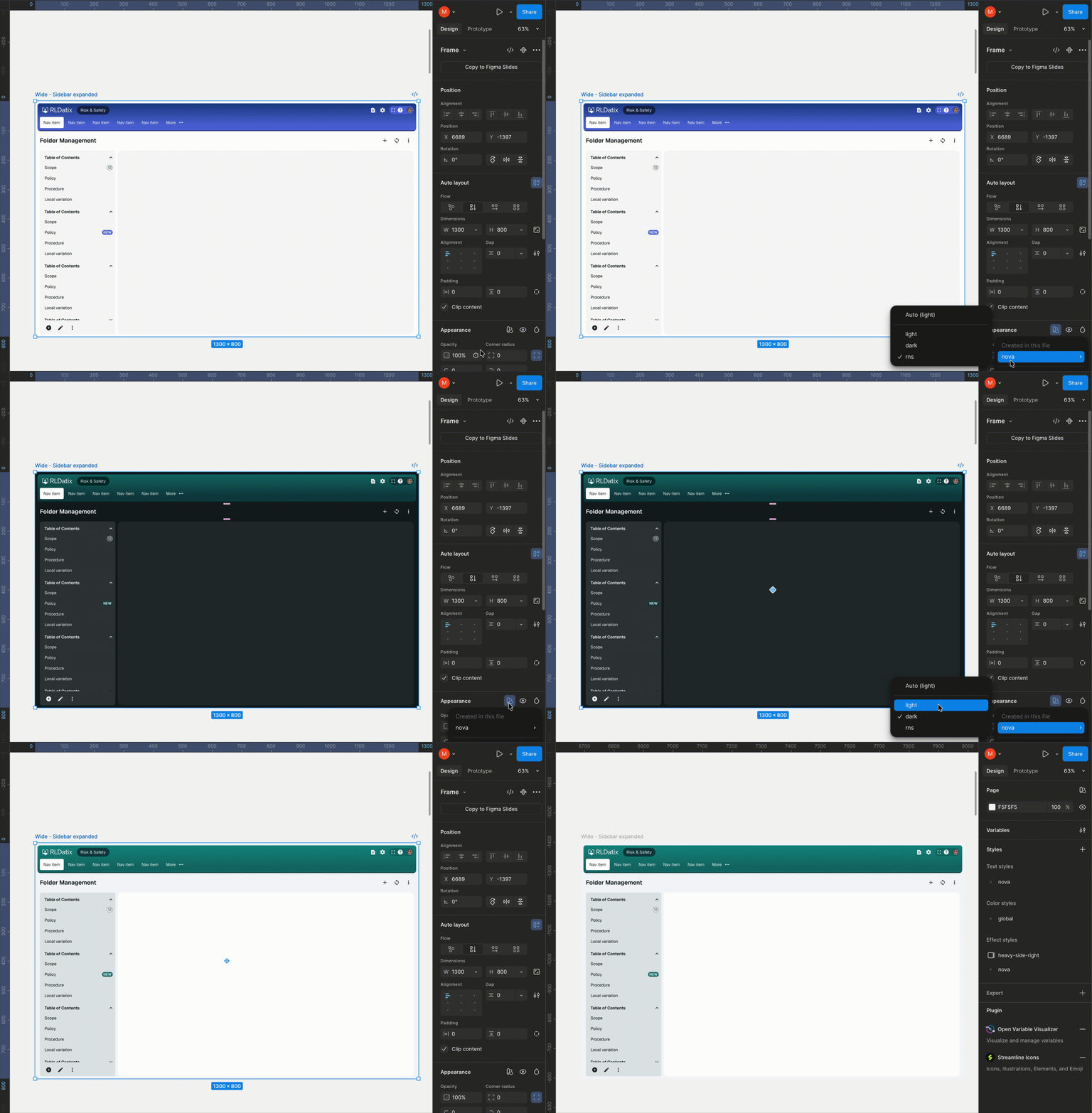
Design Tokens
All styles colors, typography, spacing, shadows, and radii were converted into tokens and managed through Token Studio plugin, ensuring they stayed in sync across both design and code. The figma variables were centralized within a shared library that served not only product teams but also marketing, creative, illustration, and brand—establishing true cross-company consistency and control at scale.
More details yet to come... as soon as I remember what I did.


“I had the pleasure of working with Matt during his time at YLD, and I can confidently say he’s one of the most thoughtful and skilled designers I’ve collaborated with.
Matt brings a rare combination of deep UX thinking, elegant UI execution, and strong product sensibility. He has a calm, considered approach to problem-solving, always grounding his design decisions in user needs while balancing technical constraints and business goals. Whether he was iterating on a complex user flow or refining the finer details of an interface, his attention to detail and clarity of thought consistently elevated the work.
What sets Matt apart is not just his craft, but his collaborative spirit. He’s a great communicator and team player—open to feedback, generous with his own insights, and always focused on building shared understanding across design, product, and engineering.
Anyone would be lucky to have Matt on their team. He’s a steady, mature presence who delivers high-quality work and makes the process better for everyone around him.

Gonçalo Stratford Andrade
Lead Product Designer“I can’t recommend Matthew enough. From day one, he brought a calm, thoughtful energy to the team, paired with a sharp eye and a deep understanding of how to scale consistency across products.
Matthew was instrumental in executing phase 2 of the project by building a solid foundation, delivering documentation, and bridging collaboration between design and engineering. His attention to detail and ability to simplify complex problems made a huge impact on the success of the project.
Beyond his craft, Matthew is simply a great person to work with; collaborative, curious, and genuinely invested in elevating the work. Any team would be lucky to have him!