A Gamified App Designed
to Help Smokers Quit
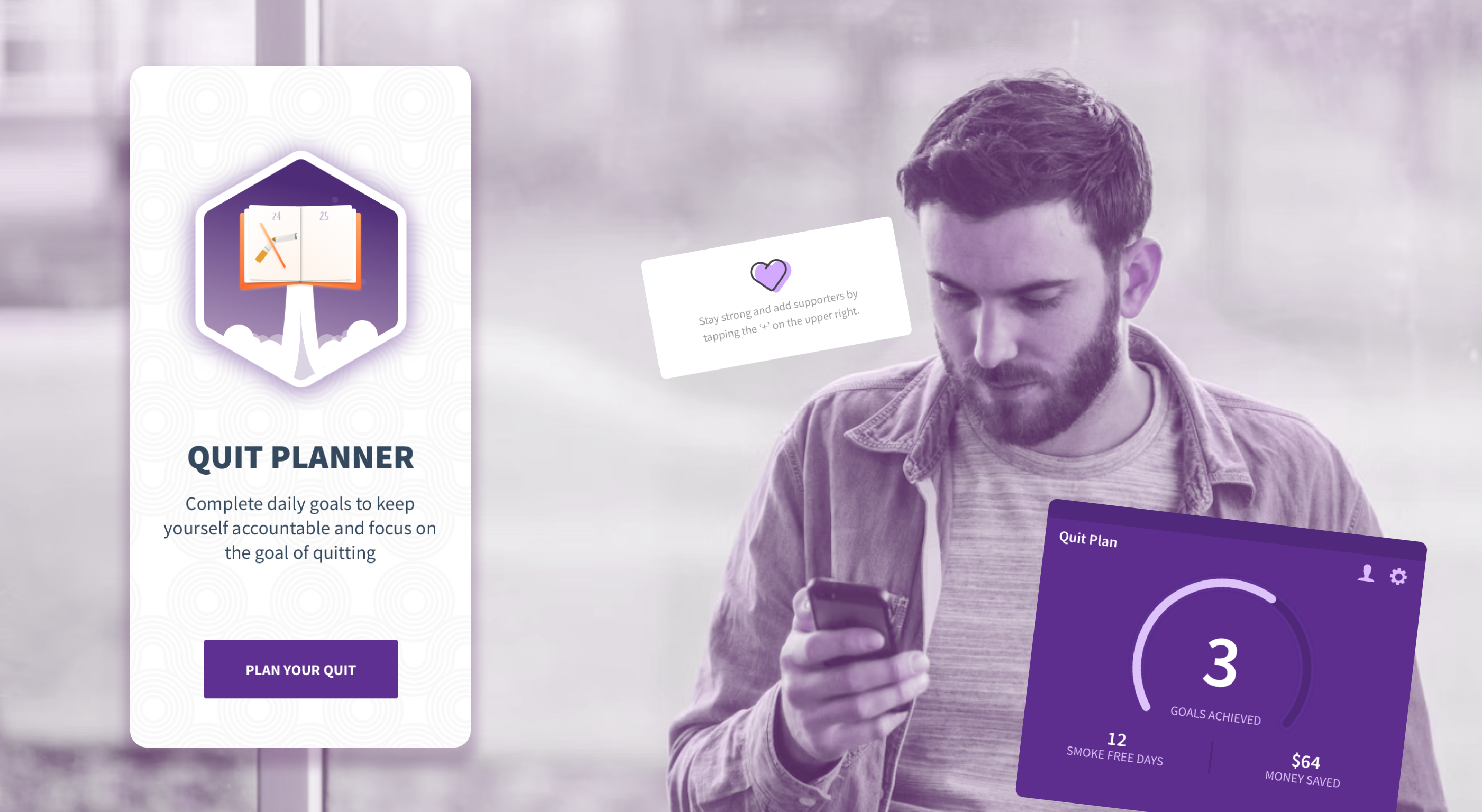
A bold mission to help smokers quit for good
I partnered with Pfizer, together with the American Lung Association to set up and to build more than just another health app. The vision was to create a support system that helps smokers not only plan their quit journey, but track it, sustain it, and, most importantly share this tough journey with a community.
My role here was to focus on the visual direction of the app, create a gamified and behavior-driven strategy, ensuring that every moment of the journey felt motivating and accessible for users striving to quit smoking.
Product
Cross-Platform App
My Responsibilities
UI/UX Design, Brand Strategy, Gamifiction Strategy
Tools
Miro, Sketch, Trello, Principle
Timeline
6 months
Collaborators
Drew Griffith, JD Jones, Tany Grinsell
Why most quit attempts fail before they begin
Cigarette smoking remains the leading cause of preventable disease and death in the United States. While 85% of smokers worry about the risks, only a fraction take concrete steps to quit. The problem? Many existing cessation programs focus on medical treatments but overlook the behavioral and emotional side of quitting. As a result, smokers often struggle with motivation, habit tracking, and long-term commitment.
Market studies also shown that having professional guidance can double a person’s chances of quitting successfully, highlighting a clear need for more holistic, accessible solutions that support both mindset and behavior change.
Quitting needed to feel less prescriptive and more tied to a deeply human journey of habit change.
What smokers told us about cravings, triggers, and relapse
Thanks to access to market research, interview recordings, and guidance from clinicians, we had a wealth of insights to comb through and learn. Smokers shared their stories of failed attempts, feelings of isolation, and the emotional rollercoaster of quitting.
There was a clear theme, while information and treatments existed, what people lacked was support, encouragement, and a way to turn everyday struggles into moments of progress. This insight became our north star that helped us focus on designing an experience that balanced behavioral science with human connection.
Key Insights
- Approximately 34.3 million adults were current cigarette smokers.
- Higher among males (24.8%) compared to females (14.2%).
- An Average annual expense of $2,372.50
- A reduction of 5-10 years in life expectancy for smokers relative to never smokers.
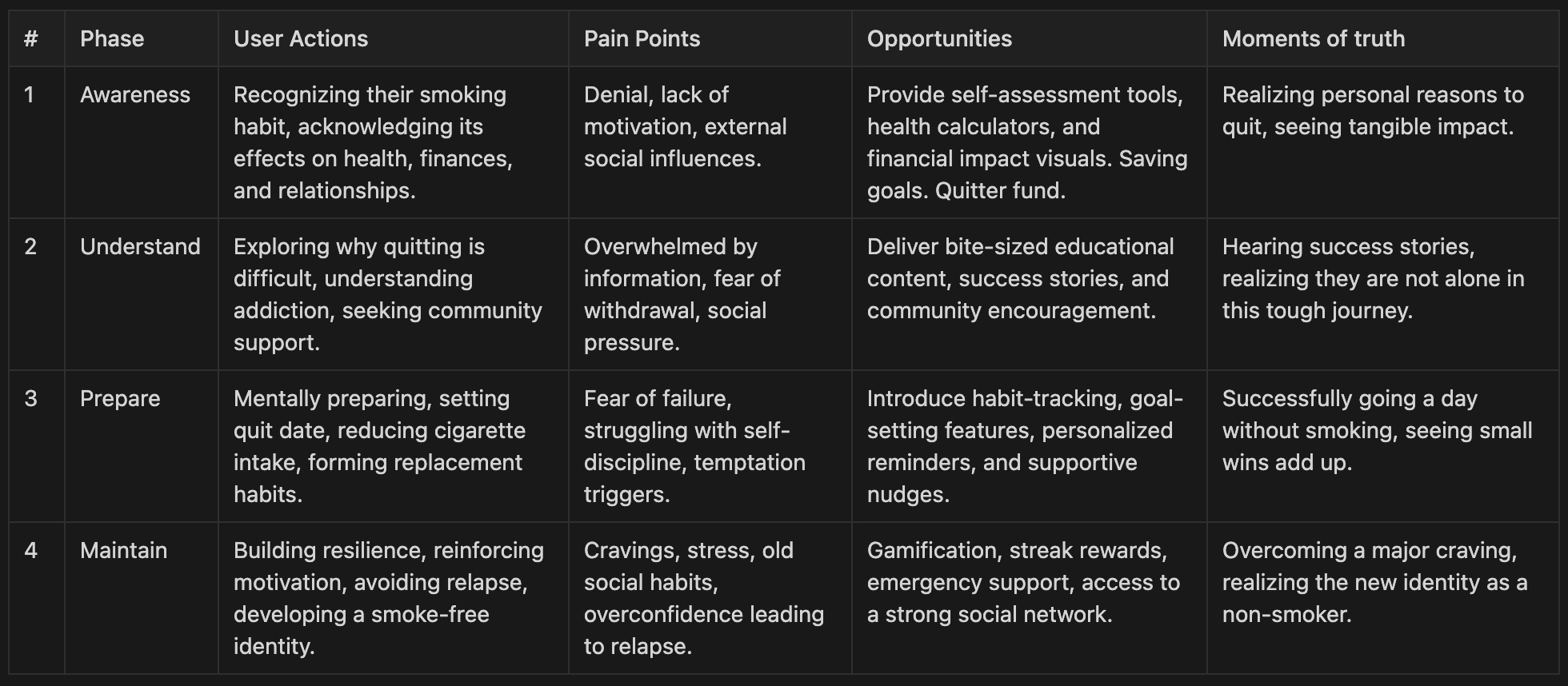
After analyzing plenty of study recordings, I captured the smokers’ experiences, emotions, thoughts, and pain points throughout their smoking habits and unsuccessful past attempts at quitting. Once presented to stakeholders, we explored bothe business and product opportunities from this discovery.
This matrix chart became our reference sheet and north star, guiding us in building a user-centered product that resonated with their struggles and motivations.
Anchoring new users with meaning, not just steps
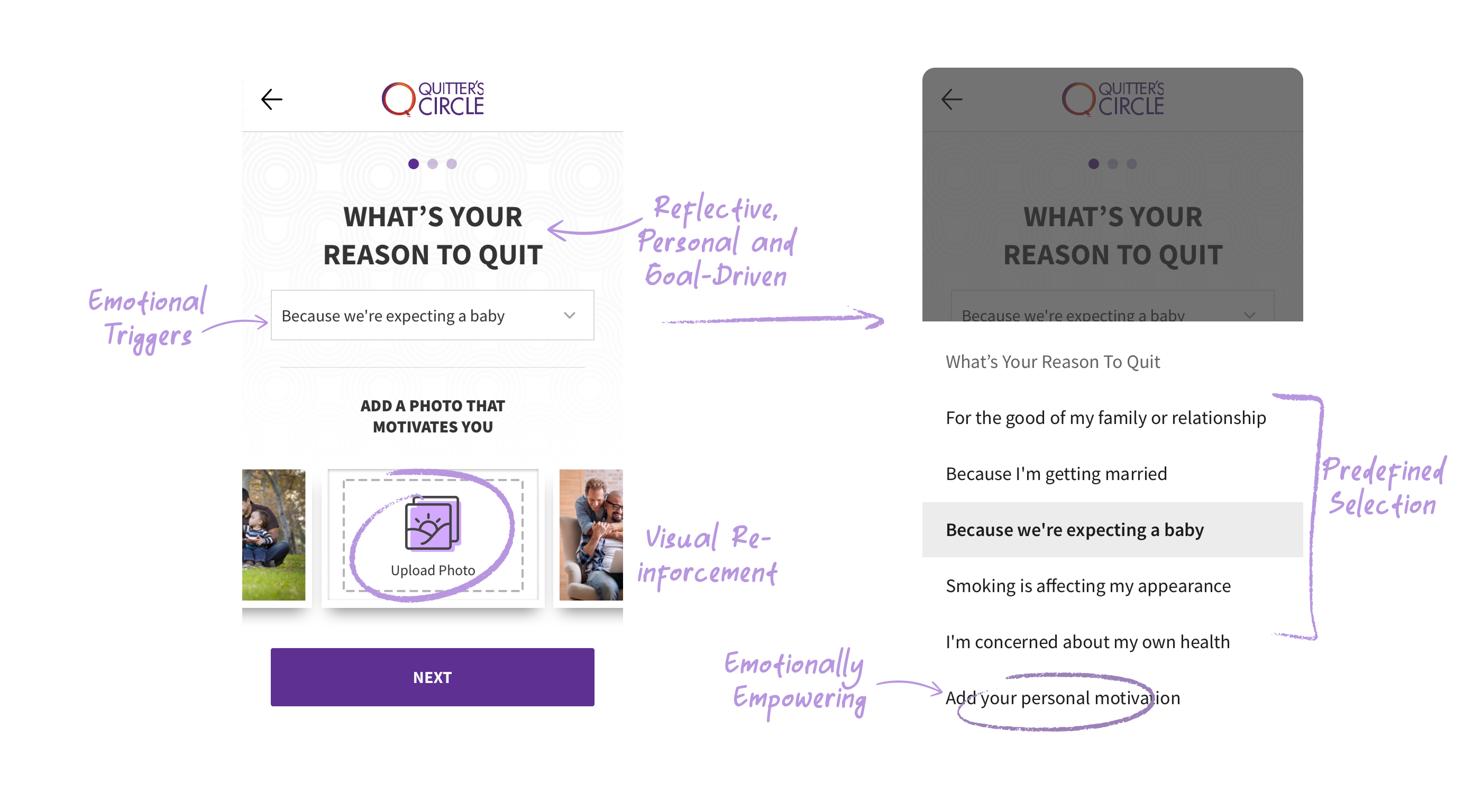
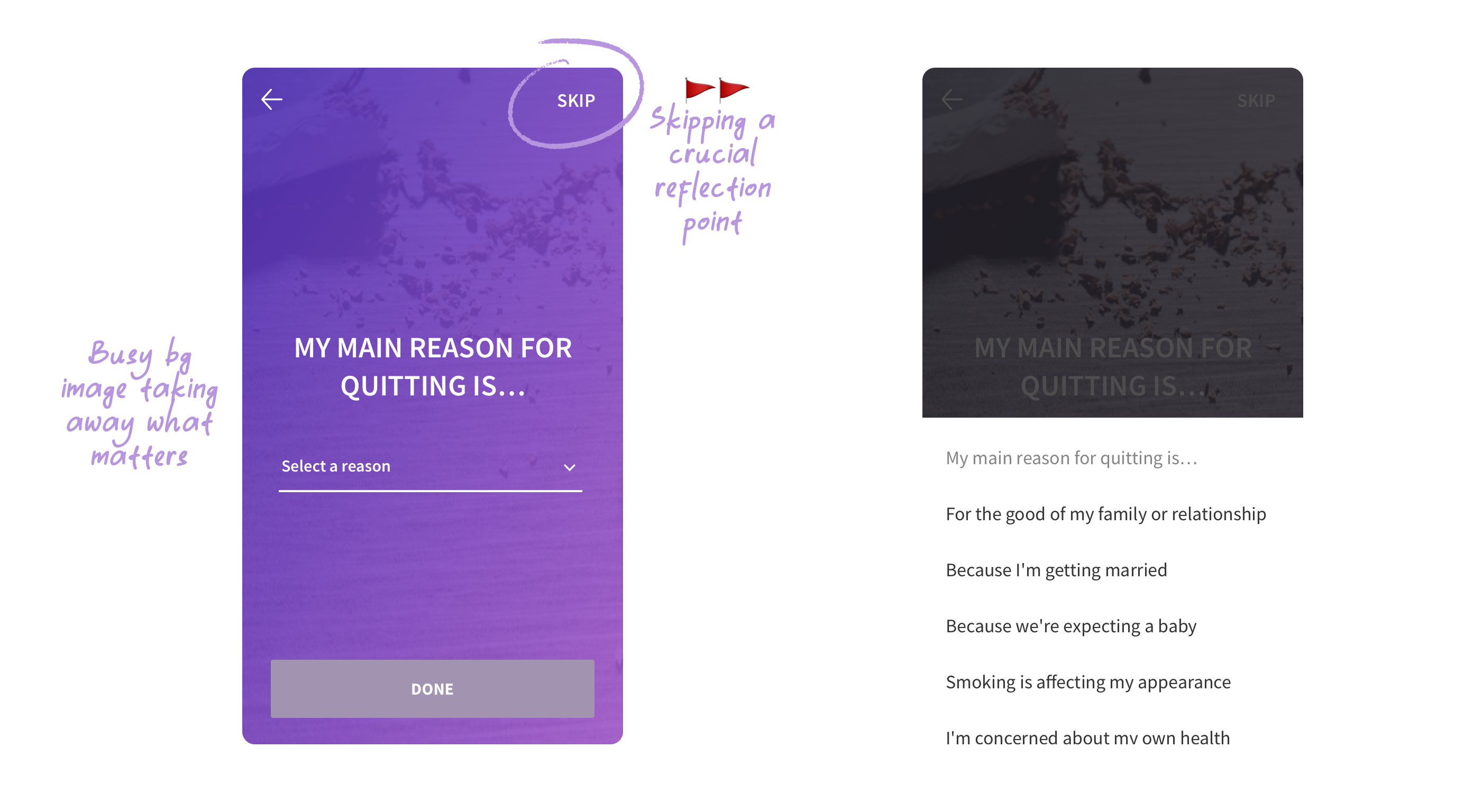
When exploring the onboarding flow, I wanted to do more than just collect user information. I wanted to design an emotional hook to anchor users.
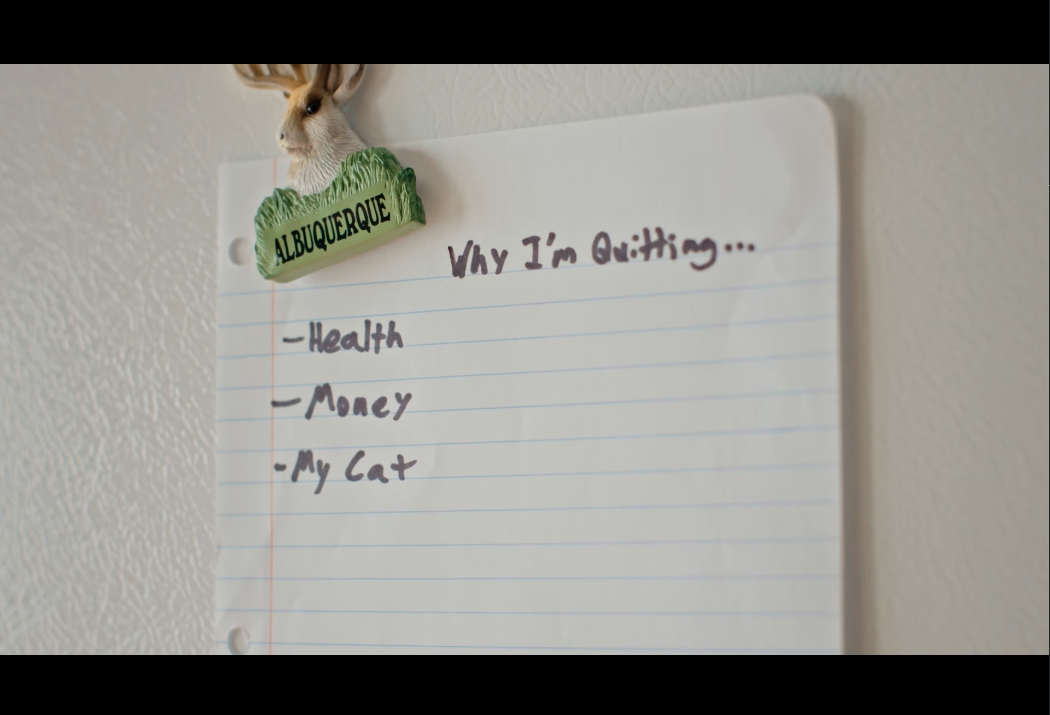
Clinicians often encourage quitters to write down their reason for quitting. Family, health, money, or relationships often become the driving force. Inspired by this, I explored ways for users to capture their “why,” including uploading a photo as a visual reminder.
Stakeholders chose to reduce the scope on this step and removed the emotional hook. Users moved through too quickly without a moment of reflection. Research shows people are more likely to commit to goals they write down or visualize, and skipping this step meant missing a chance to create that commitment.
💡 Exploration flows that were not considered
😐 The implementation for MVP launch
Gameplay mechanics that turned small wins into milestones.
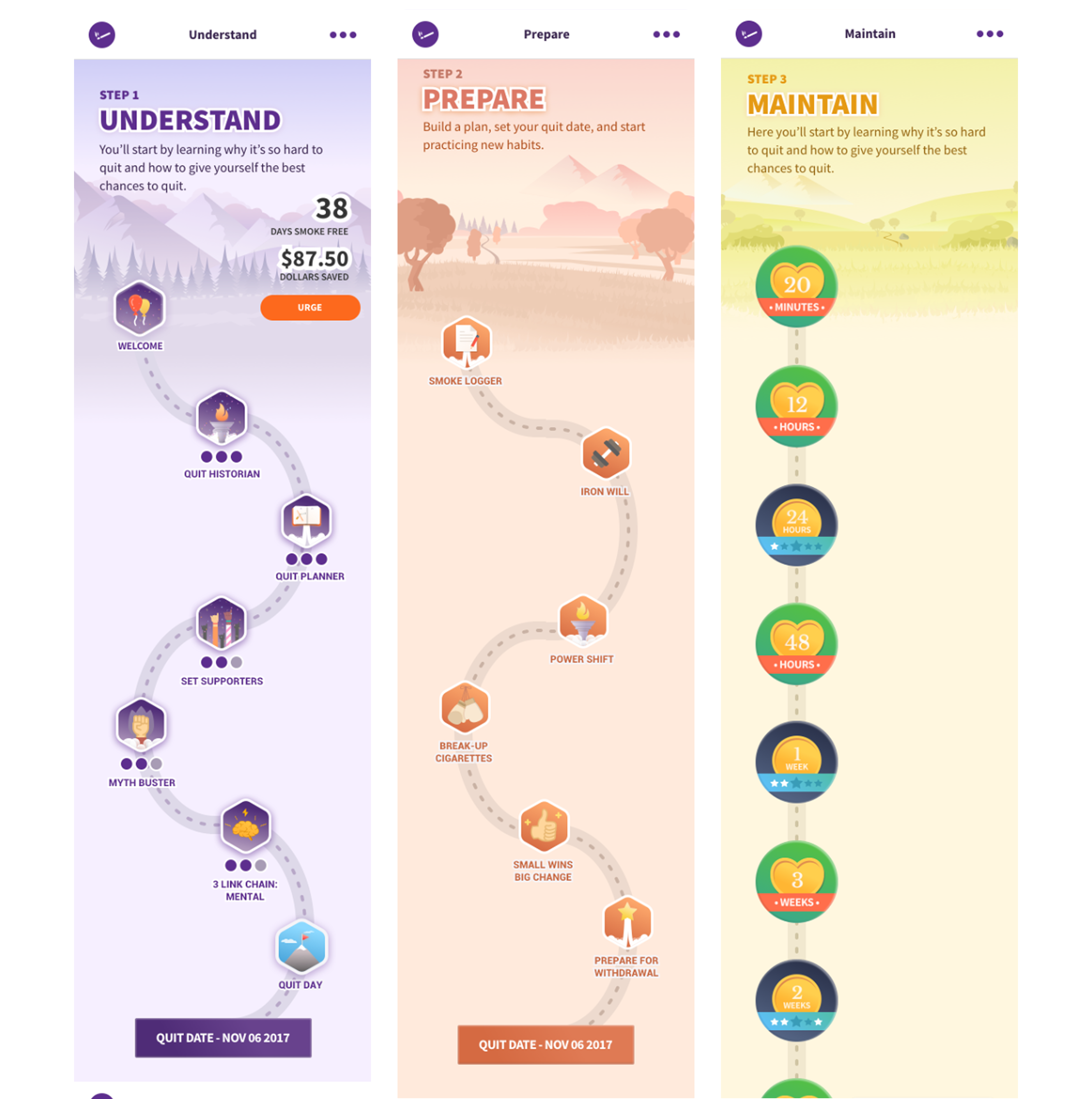
Keeping our users engaged when cravings hit was our main goal next. There have been many smoking apps in the past that have failed to capture this essential part of the journey. Alot of discussions and brainstorming went into play and we landed on gamification concepts, reimagining the homepage as a journey roadmap just like duolingos language learning.
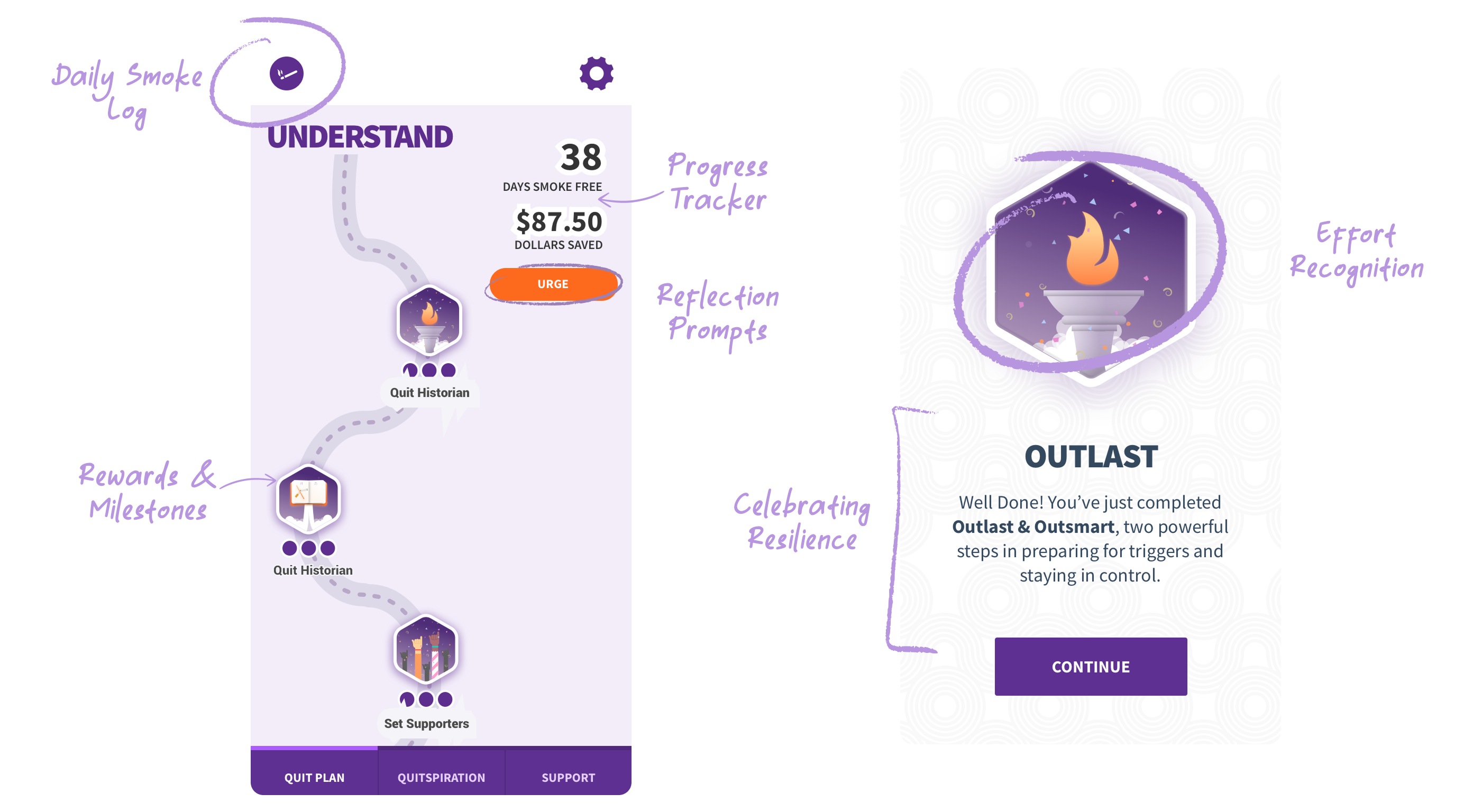
This octalysis framework was of great help back then for me to learn and work a strategy around this concept. So I got to work on alot of illustrative badges and giving rewards. Users could log their daily progress, earn badges, and celebrate streaks. Every milestone reinforced that quitting wasn’t about what they were losing — it was about what they were gaining. This shifted the experience from guilt and failure to progress and reward.
Key Gamification Elements
- Rewards and Incentives
- Progress Tracker
- Total Dollars Saved
- Milestons Celebrations
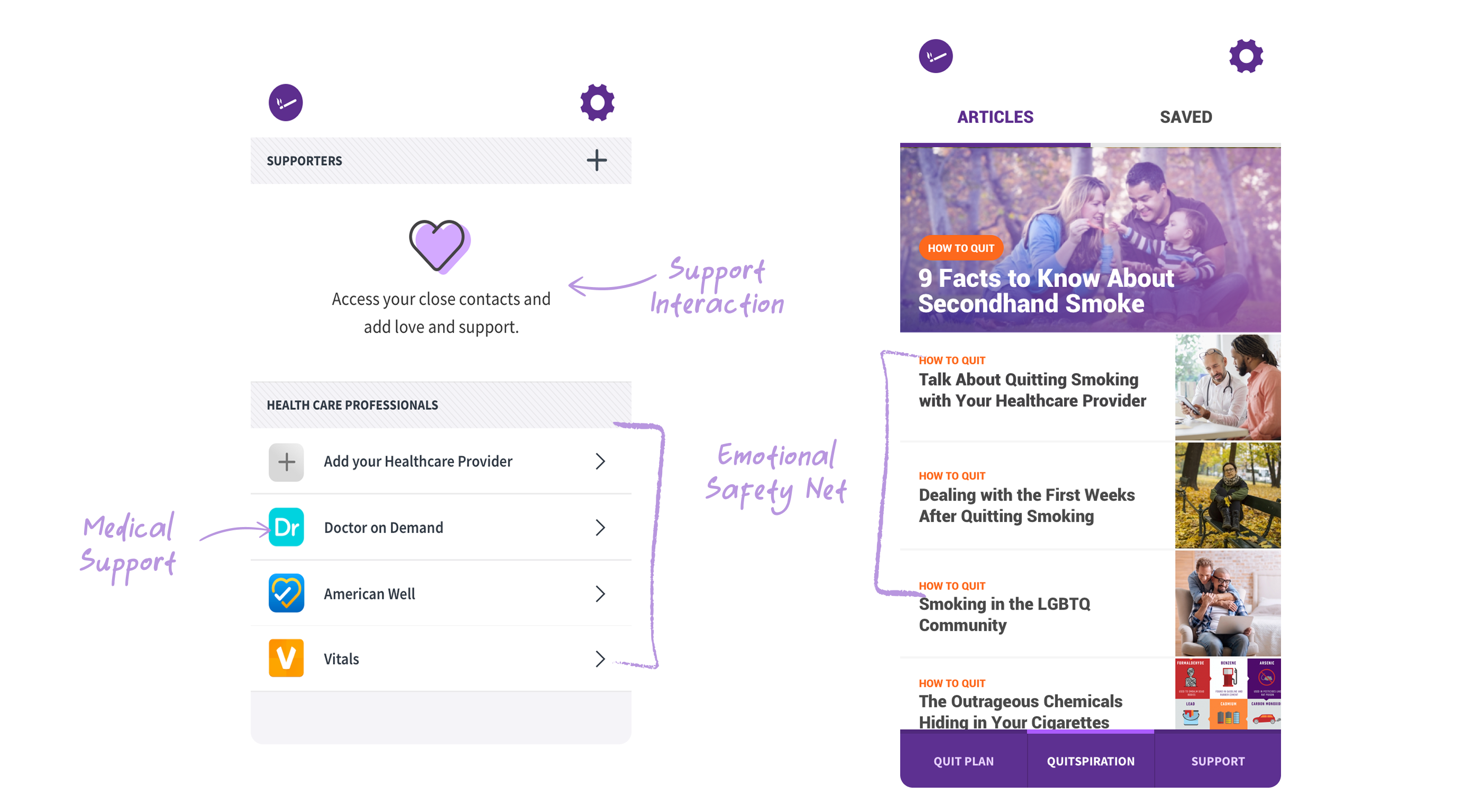
- Social Interactions
- Reflection Prompts
- Daily Journaling
Turning daily logs into moments of reflection
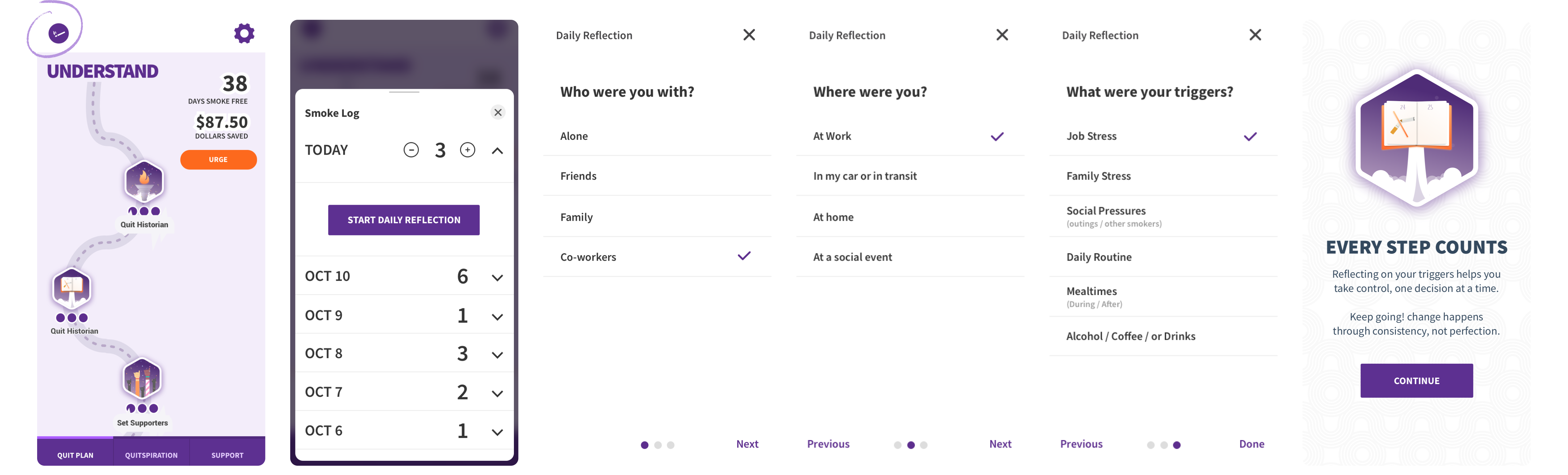
The Smoke Log was designed to be more than a tracker. It was a moment for users to pause, log when and why they smoked, and notice the patterns shaping their habits. By reflecting on their choices, they could start seeing the triggers that held them back.
This feature also became a useful companion for healthcare professionals. Together, users and clinicians could review smoking histories, uncover emotional or social triggers, and create personalized strategies for progress. It was a simple habit with powerful potential for change.
- 80% of the users failed to complete the smoke log task on their first attempt.
- Tap through rate on the Smoke Log icon was low, due to poor visual clarity.
- Time on task increased, users spending long time trying to figure out what the icon represented before taking any action.
Redesigning clarity and engagement
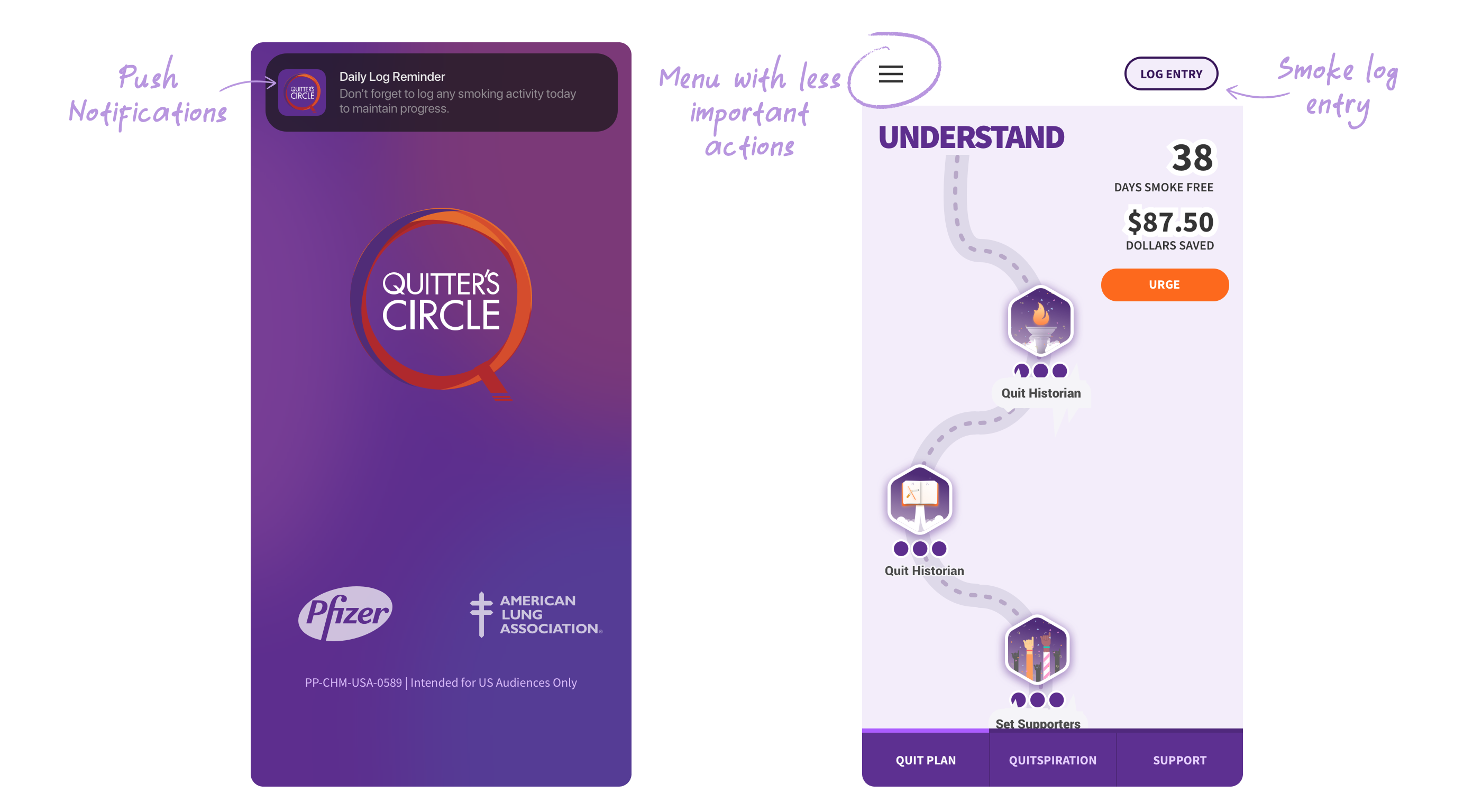
To fix the issue, I redesigned the top navigation to make logging intuitive. The settings icon was replaced with a menu and moved to the left for secondary actions. The Smoke Log was renamed to Log Entry, placed on the right, and made more visually distinct.
As a team we tested push notifications, testing different timings and messages to encourage users to log consistently. The goal was to make daily reflection feel easy, supported, and rewarding rather than forgotten.
A design flaw that led to no logs
After launch, early adoption through Pfizer’s medical partners looked promising, however users encountered a critical issue. There was a low completion rate on the most essential feature which is the Smoke Log.
The smoke log was designed to be a daily routine for self-awareness and behavior change. The roadmap already included plans to strengthen habit-forming UX, but I hadn’t anticipated such a fundamental flaw in the existing design.
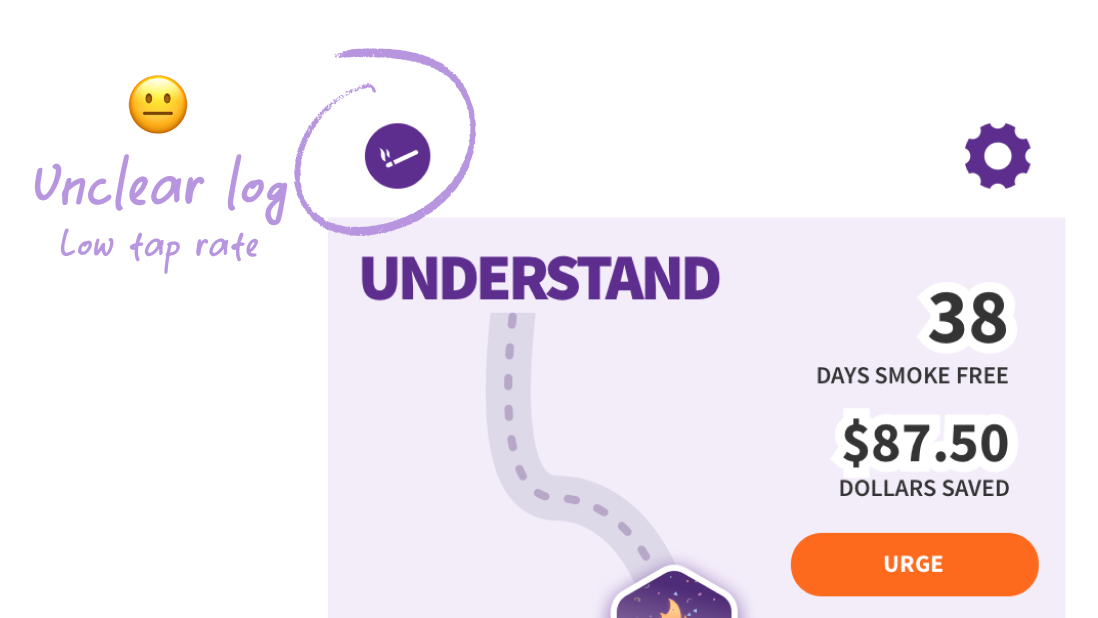
Usability testing and behavior analytics revealed the root of the problem: most users simply couldn’t find the Smoke Log. The icon representing it was often mistaken for the app’s logo, making it unclear that it was an interactive feature.
A design experience that sparked real change
What started as an MVP concept grew into a movement, showing that thoughtful design, community support, and behavior-driven experiences can truly help people change their habits.
- 20,000+ app downloads within the first year.
- 57% of users reported smoking less after using the app.
- 140,000+ engaged community members on Facebook.


“Matthew’s work on the Quitter Circle App was nothing short of exceptional. His innovative UI design, product strategy, and animations transformed the app into the best solution Pfizer could have asked for. He ensured the app was easy to use and engaging, making the challenging journey of quitting a more pleasant and supportive experience for users.
The team over at Pfizer were thoroughly impressed with his deliverables. Matthew was incredibly reliable, open to feedback, and delivered quick turnarounds, ensuring the project ran seamlessly and on time. His dedication and expertise were key to the app’s success.”